
Wildfires are spreading across parts of France and Spain, forcing more than 300,000 people to leave their homes as firefighters struggle to control the dangerous flames.
The fires come after a period of extreme summer heat across Europe. Temperatures in many areas have risen above 40C (104F), creating very dry conditions that allow fires to spread quickly.
France has experienced its worst wildfires in two decades, while officials in the Spanish capital, Madrid, say the fires affecting the region are the worst they have ever experienced.
The situation has caused widespread concern as large areas of forests and land have been destroyed by the flames.
Fires Burn Hundreds of Square Miles in Spain
In areas around Madrid, separate wildfires have burned an estimated 297 square miles (770 square kilometres) of land.
The area destroyed by the fires is larger than the entire city of Madrid.
The fires have forced thousands of people to leave their homes as authorities work to protect communities from the advancing flames.
The extreme heat and dry conditions have made it difficult for firefighters to control the fires.
Officials are continuing to monitor the situation as the fires threaten more land and communities.
France Faces Its Worst Fires in 20 Years
France has also been badly affected by the wildfires.
The worst-hit area is Gironde, a region around the city of Bordeaux that is well known for its forests and famous wine-producing areas.
More than 200,000 people have been forced to leave their homes in the region because of the danger posed by the fires.
The flames have spread quickly through forests and fields.
In less than four days, the fire had burned more than 162 square miles (420 square kilometres) of land.
That is about four times the size of Paris.
The fire has also moved closer to Bordeaux and is now about nine miles (15 kilometres) from the city.
The rapid spread of the fire has created a major challenge for emergency services, who are working to prevent the flames from reaching more homes and populated areas.
Military and Industrial Sites Also at Risk
The fires have also threatened several sensitive military and industrial facilities in the region.
Some of these sites are connected to important areas of French industry and national security.
They include facilities involved in the production of French ballistic missiles, rocket motors and the processing of hazardous chemicals.
Authorities are therefore facing the difficult task of protecting both local communities and important facilities from the advancing fires.
Satellite images of Gironde have shown large areas of land covered in black and scorched earth.
Smoke from the fires has also been seen moving inland towards the east.
Fires Create Their Own Dangerous Thunderstorms
One of the most unusual and dangerous features of the fires in France is the formation of giant fire thunderstorms.
These storms are rare and can develop when wildfires become extremely powerful.
The intense heat from the fire causes the air above it to rise very quickly.
As the air rises, it carries smoke, ash and water vapour high into the atmosphere.
The air becomes cooler as it moves higher.
The water vapour then turns into clouds.
When the fire is strong enough and the atmosphere is unstable, the cloud can continue growing until it becomes a large cumulonimbus cloud.
These are the same types of clouds that are normally linked to thunderstorms.
However, when they are created by a powerful wildfire, they can make the situation even more dangerous.
The clouds can produce lightning, which may start new fires in other areas.
In some cases, they can also produce hail and rain.
Because of these conditions, firefighters are facing an unpredictable situation that makes the fires much harder to control.
Firefighting Planes Used to Fight the Flames
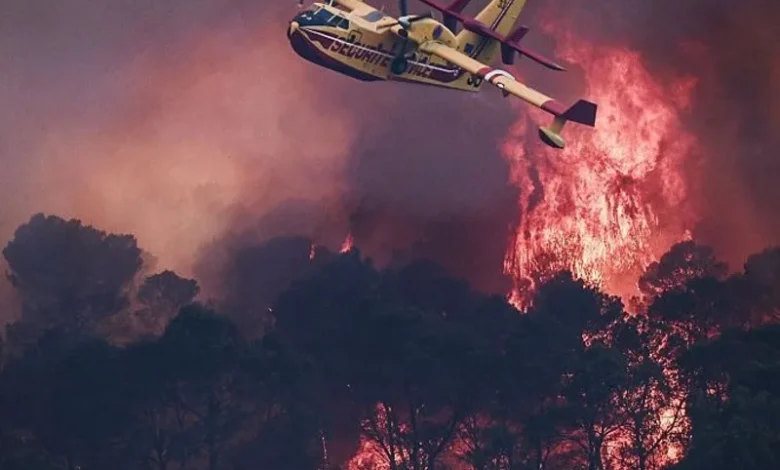
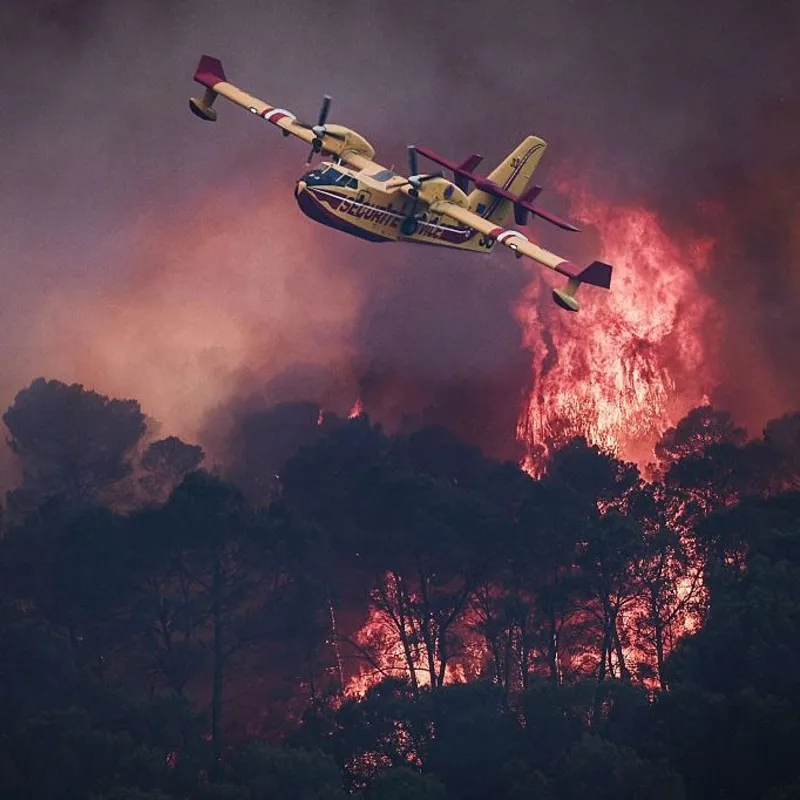
French firefighters are using aircraft to help battle the fires.
Some planes carry fire retardant, which is dropped around the edges of fires to slow their spread.
Other aircraft, including Canadair planes, are used to collect and drop large amounts of water directly onto the flames.
The Canadair aircraft can collect about 6,000 litres of water from a lake or the sea in just 12 seconds.
The water is then dropped over areas affected by the fire.
On days when the risk of fire is especially high, aircraft may patrol areas that are considered dangerous even before a fire is reported.
This allows them to respond quickly if a fire is spotted.
Once a fire is discovered, aircraft can reach the area within minutes.
The planes may continue flying back and forth to collect more water and drop it on the fire.
At the same time, other aircraft spread fire retardant around the edges of the blaze, while firefighters on the ground work directly to control the flames.
Thousands of Emergency Workers Join the Fight
A large number of emergency workers have been involved in fighting the wildfire in Gironde.
About 2,500 firefighters have been working to control the blaze.
They have been supported by around 1,500 military personnel and 1,200 police officers and gendarmes.
Despite the large number of people involved, officials say the scale of the fires has created serious challenges.
The size and speed of the fires mean that emergency services need large numbers of firefighters, vehicles and other equipment.
Gironde official Jean Luc Gleyze told the BBC that there are not enough resources to fight the fires effectively.
“We don’t have enough people and enough trucks and even I think France don’t have enough,” he said.
Extreme Heat Makes the Situation Worse
The wildfires in France and Spain come during a summer of extreme heat across Europe.
Temperatures have risen above 40C (104F) in many areas, leaving forests, grasslands and fields extremely dry.
Dry vegetation can catch fire more easily and allows flames to spread faster.
The combination of extreme heat, dry conditions and strong or changing winds can make wildfires especially difficult to control.
As firefighters continue their efforts, thousands of people remain affected by the fires and many have been forced to leave their homes for their own safety.
The situation also highlights the growing challenges faced by communities during periods of extreme heat and dangerous wildfire conditions.
With fires continuing to threaten parts of France and Spain, emergency workers are using aircraft, ground teams and military support in an effort to bring the flames under control and protect lives, homes and important facilities.