

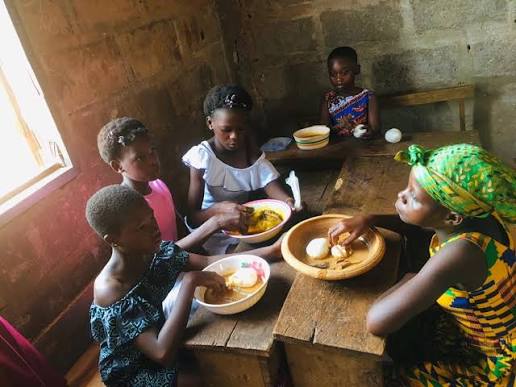
The day that was once among the most anticipated moments on the school calendar — a day filled with laughter, shared food, juice boxes, biscuits and colourful paper baskets — now appears to be at the centre of a growing national debate.
As basic schools across the country officially brought the term to an end on Thursday, July 23, 2026, social media became flooded with conversations about the changing nature of the traditional end-of-term “Our Day” celebration.
For generations of Ghanaian schoolchildren, “Our Day” was a moment of pure excitement. It was a day when pupils temporarily put aside the seriousness of lessons and examinations to enjoy food, drinks, music, games and the company of their classmates.
But according to concerns being raised by some parents on social media, the tradition is gradually changing.
What was once a simple celebration of children and the end of an academic term is now being described by some parents as an expensive exercise, with allegations that some teachers and schools are placing pressure on parents to provide gifts or money as part of end-of-term appreciation.
The claims have sparked an emotional debate about where appreciation ends and financial expectation begins.
Parents raise concerns over expensive demands
According to reports and discussions circulating on social media, some parents claim they have received direct messages or phone calls from teachers encouraging them to contribute towards end-of-term “appreciation packages.”
While some requests may involve modest gifts, others are alleged to have escalated to more expensive items, including household appliances such as microwaves and substantial amounts of money.
For parents already struggling with rising living costs, such demands can create additional financial pressure.
The concern becomes even more serious when parents feel that their children may be embarrassed, isolated or treated differently if they arrive at school without a gift.
That is where the controversy becomes more than a debate about money.
It becomes a question of fairness.
No child should feel inferior because their parents cannot afford to buy an expensive gift for a teacher.
No parent should feel compelled to spend money they do not have simply because they fear their child may be treated differently.
And no teacher should feel that appreciation is something that must be demanded rather than freely given.
Remembering the real meaning of ‘Our Day’
The controversy is particularly painful for those who remember what “Our Day” used to represent.
Growing up while living with a late grandmother, the excitement of school was often easy to understand. With school located just behind the house, the beginning of the school day was almost impossible to miss.
The moment classes were about to begin, the routine was simple: prepare quickly and rush off to school to join friends.
Those were the days of “Syto” in public schools.
But among the most memorable moments were the “Our Day” celebrations.
The excitement was not about expensive gifts.
It was about food.
It was about sharing.
It was about friendship.
It was about the simple joy of being a child.
Pupils came to school carrying biscuits, drinks and food carefully packed in beautifully decorated baskets, sometimes covered with white cloth. The baskets themselves became part of the excitement.
It was not about who brought the most expensive item.
It was not a competition among parents.
It was simply a day to celebrate.
“When I was in primary school, our biggest excitement was not about buying gifts for teachers. We looked forward to bringing biscuits, drinks, and food packed in beautifully decorated baskets covered with white cloth. That was the real joy. It was never a rule. No parent was forced, and no child felt embarrassed.”
That memory captures what many believe “Our Day” should continue to represent.
Teachers deserve appreciation too
However, while the concerns raised by parents deserve serious attention, it is equally important not to paint all teachers with the same brush.
Teachers play an enormous role in Ghanaian society.
Their responsibilities go far beyond standing in front of a classroom and teaching lessons.
Teachers counsel children.
They provide emotional support.
They guide pupils through difficult moments.
They sometimes spend their own money to help children who cannot afford basic school materials.
In some cases, teachers become almost like additional parents to the children under their care.
There are countless teachers across Ghana who work under difficult conditions, often with limited resources, large class sizes and enormous workloads.
These teachers deserve recognition.
If a parent genuinely believes that a teacher has made a meaningful difference in the life of their child and voluntarily chooses to give that teacher a gift, there is absolutely nothing wrong with it.
In fact, appreciation has always been an important part of Ghanaian culture.
A small gift given freely and sincerely can mean a great deal.
The problem begins when appreciation stops being voluntary and becomes an expectation.
Appreciation should never become obligation
There is a fundamental difference between giving and being compelled to give.
When a parent decides, out of gratitude, to buy a teacher a small gift, that is appreciation.
When a parent is told or made to feel that they must provide an expensive item or a specific amount of money, the situation becomes very different.
A gift should bring happiness.
It should not bring anxiety.
It should not force parents to borrow money.
It should not create competition among families.
And it should certainly not determine how a child is treated in school.
For families already struggling to pay school fees, buy uniforms, purchase textbooks and provide food for their children, additional financial demands can be overwhelming.
Parents should not have to choose between meeting basic household needs and buying an expensive “appreciation” package.
Private schools and the expectations debate
Some have argued that parents who choose private schools should understand that private institutions may have different expectations and traditions.
There is some merit to the argument that parents who voluntarily enrol their children in private schools should familiarise themselves with the school’s policies and practices.
However, that does not mean appreciation should become compulsory.
The fact that a parent chooses a private school does not give any teacher or institution the right to place unreasonable financial pressure on that parent.
Schools should be transparent about legitimate fees and charges.
Parents should know what they are expected to pay.
Any voluntary contribution should remain genuinely voluntary.
And most importantly, children should never become the instruments through which financial pressure is placed on their parents.
Don’t condemn every teacher
At the same time, this conversation should not become an excuse to attack the entire teaching profession.
If a particular teacher makes unreasonable demands, the appropriate response should be to address that specific situation.
If a school has a policy that parents consider inappropriate, the matter should be raised with the school’s management.
Parents should be encouraged to speak up when they feel uncomfortable.
But we must also recognise that many teachers are doing their best under challenging circumstances.
And they deserve appreciation when they genuinely go above and beyond for their pupils.
The solution is therefore not to destroy the culture of giving.
It is to restore the spirit behind it.
Let us preserve the culture of kindness
Ghanaians have always been known for generosity.
We share food because we believe in community.
We help others because we understand that life is not lived alone.
That culture should not disappear simply because some people may have abused the idea of appreciation.
The answer is to return to the principle that made “Our Day” special in the first place.
Let teachers be appreciated voluntarily.
Let schools create celebrations that do not place unnecessary financial burdens on families.
And let no child ever feel ashamed because their parents could not afford an expensive gift.
The real value of “Our Day” was never
found in the price of a microwave, the amount of money in an envelope or the size of a gift basket..
And it was found in the simple act of saying thank you.
Perhaps that is the lesson we need to remember.
Appreciation is most meaningful when it comes freely from the heart.
When appreciation becomes an obligation, it loses something essential.
So, as Ghana continues to debate the future of “Our Day,” let us not lose the spirit that created the tradition in the first place.
Let us teach our children that kindness is not measured by how expensive a gift is.
Let us remind ourselves that teachers deserve respect and appreciation, but parents also deserve understanding.
Above all, let us ensure that a celebration created to bring children happiness never becomes a source of fear, embarrassment or financial hardship for the families who simply want to see their children smile.





One Comment