

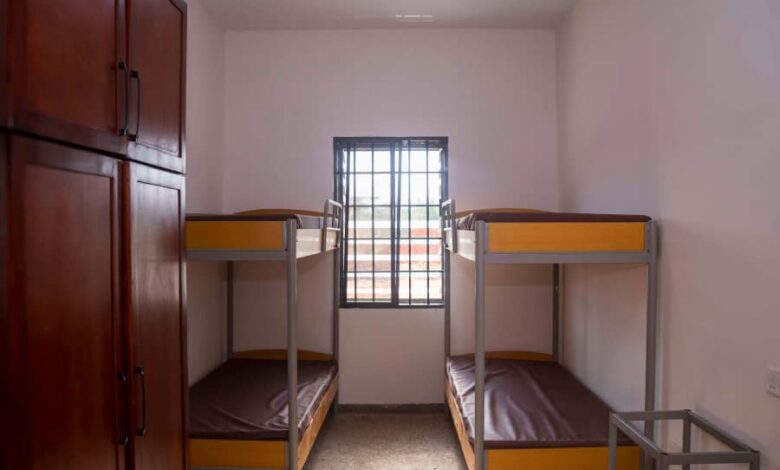
Anyone who has paid a hostel bill, or helped someone pay one, knows how it feels. The money is due before the semester even starts. It rarely goes down.
So when I read that the Education Minister wants to put limits on how fast university accommodation charges can rise, my first reaction was relief. My second was a more careful one. Let me explain both.
What the Minister proposed
Education Minister Haruna Iddrisu has proposed a way to guide yearly increases in accommodation charges at public universities. Adomonline quotes him: “We can say, for instance, take inflation as a guide, 5 to 10 per cent increase annually.”
He wants a committee to study accommodation costs. It would then advise Finance Minister Dr Cassiel Ato Forson on what increase is acceptable under the Fees and Charges Act, according to Adomonline.
On the face of it, that is a reasonable idea. It gives families something to plan around.
It is only a suggestion
Here is the first catch. Asaase Radio reports that the proposal would need further consideration before it could be put into effect.
It adds that the Minister did not say whether the committee has been formally set up. He also did not say whether the 5 to 10 percent range would become an official benchmark.
So for now, this is an idea. It is not a rule. Nobody should tell a student to expect a cap.
We have been here before
This is not the first time the Minister has stepped into student housing. YEN.com.gh reports that in May he announced a committee to look into hostel fees. That followed inspections by the Rent Control Department. Some hostels at the University of Ghana, YEN says, were charging up to GH¢10,000 per semester.
YEN quotes him from that occasion: “Be assured that the government will simply not run on the principles of private partnership where unlimited fee guidelines will dictate the pace.”
A week later, there was another report that the Rent Control Department told private student hostel operators to put a temporary hold on planned fee increases for the 2026/2027 academic year.
Notice the difference. The May row was about hostels near campuses, and the freeze applied to private hostels. This week’s proposal is described as being about accommodation charges at public universities. Those are two different problems.
What 5 to 10 percent looks like next to inflation
Graphic Online reports that the Ghana Statistical Service put inflation at 5.2 percent in September.
Now do the sum. The bottom of the Minister’s range sits right on top of today’s inflation. That is fair. The top of the range is nearly double it.
If inflation is the guide, then a ceiling twice as high as inflation is not much of a guide. A university could raise fees by 10 percent and still be inside the rule, in a year when prices overall are rising by about 5 percent.
That is my reading of the numbers. It is not something the Minister has said. But it is the question I would put to the committee first.
The fair objection
I do not want to be one-sided. The High Street Journal makes a point that deserves a hearing. If accommodation charges do not keep pace with rising costs, it says, universities could come under pressure to find extra money for hostel maintenance and new housing.
That is true. A cap that ignores what it costs to keep a hall running could leave it in worse shape. A cap does not build a single new bed.
So the committee has a real balancing job. It must protect students without starving the places they live in.
What I would like to see
First, a clear rule instead of a range. If the committee settles on a figure, tie it plainly to a published inflation number, and say how.
Second, a clear statement of who is covered. Public university halls? Private hostels near campus? Both? Families deserve to know which rule applies to them.
Third, a student on that committee. Those who pay the bills should have a voice in setting the limit.
And fourth, a plan for new beds. A cap helps today. More rooms help for years.
The bottom line
I welcome the idea. Predictable fees are better than surprise ones. But a suggestion is not a safeguard, and a range that stretches to double inflation is a generous one.
Let the committee do its work. Then let us see the number, the scope and the reasons, in plain words, before anyone calls this a win for students.