

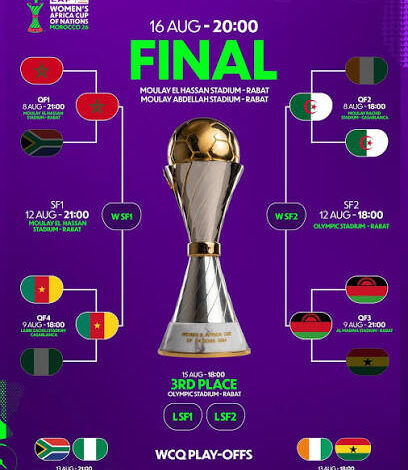
The Women’s Africa Cup of Nations has reached its business end. Four teams remain standing, and each has a real case for the title. This is a look at who made it, how they got there, and what their success means for the broader growth of women’s football on the continent.
The Road to the Semifinals
WAFCON 2026 began with a competitive group stage that produced several tight finishes. Ghana’s Black Queens made a strong push before falling to Malawi in the quarterfinals, ending their run in a match that showed just how far Malawi’s program has developed in recent years.
Algeria became the first team to officially confirm its semifinal spot, defeating Ivory Coast in a tense quarterfinal that saw goals from Ines Khiri and Amira Ould Braham cancel out an early Ivorian lead. That win marked a significant milestone for Algerian women’s football, which has steadily built momentum over the past several tournament cycles.
South Africa’s Banyana Banyana also advanced, though not without a scare. The reigning side scraped through their quarterfinal against Morocco, the tournament hosts, in a match that tested their composure in front of a passionate home crowd for their opponents.
Why Nigeria Remains the Team to Watch
Nigeria enters the semifinal stage as the tournament’s most successful nation historically, having won ten of the thirteen WAFCON titles contested since the competition launched in 1998. That record alone makes them a constant favorite heading into any tournament.
This year’s Super Falcons squad has leaned on a mix of experienced internationals and rising talent. Forward Gift Monday, playing in her WAFCON debut, made an immediate impact just minutes into her first tournament appearance and has continued to be a factor as the competition progressed.
Facing continued pressure from rivals like Egypt in earlier rounds, Nigeria’s squad has shown the kind of tournament resilience that has defined their dominance over the years. Whether that dominance continues at this year’s tournament will depend heavily on how they handle the increased quality of opposition at the semifinal stage.
Morocco’s Home Advantage
As tournament hosts, Morocco carried significant pressure and equally significant support throughout the competition. Home advantage in a tournament like WAFCON is not just about crowd noise. It includes reduced travel fatigue, familiar conditions, and a level of institutional support that visiting teams simply do not have access to.
Although Morocco’s run ended at the quarterfinal stage against South Africa, their tournament performance reflects the broader investment the country has made in women’s football infrastructure in recent years, an investment that is likely to pay dividends in future tournament cycles even if this year’s title bid falls short.
What Makes This Tournament Different
Several factors have made WAFCON 2026 stand out compared to recent editions. The overall quality of play across the group stage was notably higher, with fewer lopsided results and more competitive matches throughout. This reflects the continued professionalization of women’s football across multiple African nations, not just the traditional powerhouses.
Algeria’s rise, in particular, signals a broadening of competitive depth in the tournament. For years, a small handful of nations dominated the later stages of WAFCON. Seeing new contenders break through into the semifinals suggests the gap between established programs and developing ones is narrowing.
The Broader Investment Story
Behind the on-field results sits a larger story about investment in women’s football across Africa. Football federations in several countries have increased funding for women’s programs in recent years, driven partly by rising commercial interest and partly by pressure from players and advocates pushing for parity with men’s programs.
This tournament’s semifinal lineup reflects that shift. Countries that have invested consistently in coaching, youth development, and domestic league infrastructure are producing results at the international level. That correlation is not accidental. It reflects a pattern seen across sports globally, where sustained investment eventually shows up in tournament performance.
What Comes Next
The semifinal matchups will determine which two teams advance to the final, with each side carrying different strengths into the next round. Nigeria’s tournament pedigree gives them a psychological edge, while Algeria’s momentum and South Africa’s tournament experience as reigning champions make both credible threats to that dominance.
Regardless of the outcome, this tournament has already reinforced a broader trend. Women’s football in Africa is becoming more competitive, more professionally supported, and more commercially visible than it has been in previous tournament cycles.
Why This Matters Beyond the Trophy
The impact of a strong WAFCON tournament extends well beyond crowning a champion. Increased visibility tends to translate into better sponsorship deals for national federations, more resources for domestic women’s leagues, and greater opportunities for players to secure professional contracts abroad.
Players who perform well on this stage often see direct career benefits, from moves to European clubs to increased endorsement opportunities. This creates a positive cycle that benefits not just the players competing this year, but the next generation of young girls watching the tournament and considering football as a viable path.
The Bottom Line
WAFCON 2026’s semifinal lineup tells a story of both continuity and change. Nigeria’s continued dominance sits alongside Algeria’s breakthrough run, while South Africa defends its title credentials as reigning champions. Whatever the final result, this tournament has reinforced that African women’s football is entering a period of genuine competitive depth, a trend worth watching well beyond this year’s final whistle.





One Comment