
A recent incident involving a Member of Parliament and a young schoolgirl during a civic education visit to Ghana’s Parliament has sparked public concern about child protection and the responsibility of public institutions.
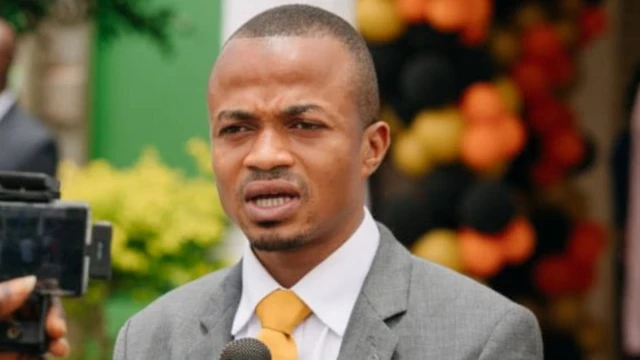
During the school visit, Yakubu Mohammed, the Member of Parliament for Ahafo Ano South East, reportedly singled out one of the primary school pupils who was visiting Parliament with her classmates.
The MP asked the girl for her name, complimented her appearance and then told her that he would marry her when she grew up.
He reportedly went further by telling the group that the young girl was now “his wife.”
The incident was recorded on video and later circulated widely across the country, leading to strong reactions from journalists, gender activists and human rights advocates.
Following the public criticism, Mr Mohammed apologised and admitted that his comments were inappropriate. He also acknowledged that his remarks had caused distress to the child, her family and members of the public.
However, the argument is that the apology should not be considered the end of the matter.
An apology may be necessary, but it should be viewed as only the beginning of a wider institutional response.
Why the Apology Alone Is Not Enough
An apology can show that someone regrets what they said or did. However, it does not automatically address the responsibilities of the institution where the incident occurred.
The young girl was visiting Parliament as part of an official school civic education programme.
She was therefore in a place where children should be able to learn about Ghana’s democratic system in a safe and respectful environment.
Instead, she was publicly singled out by a sitting lawmaker and made the subject of a marriage-related joke in front of her classmates.
The concern is therefore not only about the MP’s personal conduct.
It also raises questions about whether Parliament has enough safeguards to protect children who visit the institution.
When a child is placed in a situation like this during an official programme, the institution has a responsibility to take the matter seriously.
Parliament Should Consider Formal Action
One possible step is for the matter to be referred to Parliament’s Privileges Committee.
Conduct that is considered inappropriate for a Member of Parliament, especially conduct involving a child during an official parliamentary programme, should be examined through the appropriate disciplinary process.
A public apology to the media should not necessarily replace a formal review of the incident.
Parliament should have the opportunity to determine whether the conduct violated its standards and what action, if any, should follow.
The Speaker’s Office Should Respond
The leadership of Parliament should also consider making a clear public statement about the standards expected of MPs when interacting with children.
A formal statement from the Speaker’s office would make it clear that inappropriate comments directed at children are not acceptable.
This would also send an important message to teachers, parents and young people who participate in parliamentary outreach and civic education programmes.
The responsibility for protecting children should not be left to journalists, activists or civil society groups to raise concerns whenever an incident occurs.
Parliamentary School Visits Need Stronger Safeguards
The incident also highlights the need to review how school visits to Parliament are organised. Children who visit the institution should be protected through clear safeguarding policies.
There should be proper guidelines on how MPs, parliamentary staff and other officials interact with visiting children.
These guidelines should make clear what is acceptable and unacceptable when adults interact with minors.
There should also be a clear system through which teachers and parents can report concerns if a child experiences inappropriate treatment during a parliamentary visit.
Child Safeguarding Training Should Be Mandatory
Members of Parliament and parliamentary staff who regularly interact with schoolchildren should receive proper child safeguarding training.
Such training should not be treated as a symbolic exercise. It should be a regular requirement for anyone involved in programmes that bring children into Parliament.
The training should help public officials understand the importance of appropriate language, professional boundaries and the special responsibility adults have when interacting with children.
Support for the Child and Her Family
The incident also raises questions about the experience of the young girl and her family. The child was reportedly placed at the centre of a national public discussion after the video spread widely.
Whatever the circumstances, she should not be left to deal with the emotional impact of the incident alone.
Parliament should consider offering private support to the child and her family, including access to professional counselling if they want it.
Such support should come from the institution itself rather than requiring the family to navigate the situation on their own after the incident became a national story.
The Harm Must Be Properly Understood
The issue is bigger than one inappropriate joke.
The concern is about the effect of such comments on a child and the message they can send when they come from someone in a position of authority.
A young girl should be encouraged to think about her education, dreams, talents and future.
She should not be made to feel that her value can be discussed in terms of whether she could become someone’s wife.
The fact that the comments were made inside Parliament makes the situation even more sensitive.
Ghana has spent years educating the public about the dangers of child marriage and the importance of protecting children.
For that reason, comments about a young girl becoming someone’s wife, even when presented as a joke, can be deeply uncomfortable and troubling, particularly when they come from a public official.
Calls for Stronger Action
Some commentators have already criticised the remarks.
A gender activist described the comments as reflecting a “low moral standard” and called for Parliament to take action against the MP.
A human rights advocate also criticised the remarks, arguing that they focused attention on the girl’s appearance rather than her potential and future.
These reactions reflect broader concerns about how children, especially girls, are treated and spoken about by adults in positions of authority.
What Should Happen Next?
The goal should not be to create public outrage for its own sake or to make a permanent judgement about the personal character of the MP.
The focus should instead be on ensuring that the incident leads to meaningful action.
Parliament should consider:
A formal ethics referral and a publicly communicated outcome.
A clear safeguarding policy for all future school visits.
Mandatory child safeguarding training for MPs and parliamentary staff involved in school programmes.
A safe and confidential reporting system for teachers and parents.
Appropriate private support for the child and her family.
These steps would demonstrate that Parliament takes its responsibility towards children seriously.
Protecting the Next Child
An apology may help bring an individual’s public controversy to an end, but it does not necessarily prevent a similar situation from happening again.
The real test is whether Parliament learns from the incident and puts stronger systems in place to protect children who visit the institution.
Every child who enters Parliament for a school programme should feel safe, respected and valued.
They should leave with a better understanding of democracy and public service, not with the experience of being publicly singled out or made the subject of an inappropriate adult joke.
An apology may close a news cycle, but stronger institutional safeguards are what can protect the next child who walks through Parliament’s doors.