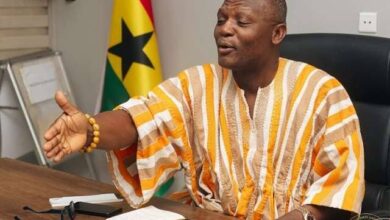
They said we’re going to build seven stadia and 600 CHPS compounds – Oppong Nkrumah mocks NDC


Ranking Member on Parliament’s Economy and Development Committee, Kojo Oppong Nkrumah, has accused the government of abandoning several major promises outlined in its economic programmes, arguing that its performance should be judged against the specific targets it promised to deliver.
The Ofoase/Ayirebi Member of Parliament made the allegation while discussing the government’s performance and the implementation of its economic programmes.
According to him, the government should not be assessed only through broad claims of development or a small number of projects it has completed. Instead, he said its record should be measured against the specific commitments made in the 2025 and 2026 economic programmes.
Mr Oppong Nkrumah argued that several important promises in areas such as healthcare, education and sports have either not been delivered or have been reduced from what was originally announced.
His comments have added to the ongoing political debate over the government’s economic performance, development plans and ability to turn its promises into measurable results.
Oppong Nkrumah Questions Government’s Performance
Mr Oppong Nkrumah said there is a need for a clear comparison between what the government promised and what has actually been implemented.
He argued that government programmes should not be judged simply by pointing to a few achievements while ignoring other major commitments that were announced at the beginning of the administration.
According to him, citizens deserve to know whether the targets contained in the government’s economic programmes are being met.
He said the government’s performance should therefore be examined using measurable indicators, including budget allocations, implementation levels and the actual outcomes of the programmes.
Speaking on Citi FM on Monday, August 10, 2026, Mr Oppong Nkrumah said the government had failed to sustain many of the major outcomes it initially outlined.
“There are only about three games in town. Everything else that they listed, literally they have abandoned it,” he said.
He further accused the government of relying on a limited number of achievements to support its claims of good performance.
Mr Oppong Nkrumah said this approach does not provide a complete picture of the government’s record because the original programmes contained several other commitments.
Health Infrastructure Promises
One of the areas highlighted by Mr Oppong Nkrumah is healthcare infrastructure.
He referred to the government’s promise to expand health infrastructure across the country, including the construction of 600 Community-based Health Planning and Services compounds.
The CHPS programme is particularly important in Ghana’s healthcare system because CHPS compounds are designed to bring basic health services closer to communities, especially people living in areas where access to larger health facilities may be difficult.
Mr Oppong Nkrumah questioned whether the government’s original target is being delivered at the scale that was promised.
“You were here when they said we were going to build 600 CHPS compounds in the first year, and now they said they were going to do about 35 Agenda 111s,” he said.
His comments place the issue within the wider question of whether the government’s development commitments are being implemented according to the timelines and targets presented to the public.
The construction of healthcare facilities has been a major issue in Ghana for several years, with successive governments using infrastructure projects as part of their plans to improve access to healthcare.
For communities without adequate medical facilities, promises involving new CHPS compounds and hospitals can have a direct impact on residents.
However, Mr Oppong Nkrumah’s argument is that such commitments should be assessed based on actual implementation rather than announcements.
Agenda 111 Also Comes Under Scrutiny
Mr Oppong Nkrumah also referred to the government’s plans involving Agenda 111 projects.
Agenda 111 has been associated with the construction of hospitals across Ghana as part of efforts to improve healthcare infrastructure and expand access to medical services.
The project has attracted significant political attention over the years because of its size, cost and implementation challenges.
By referring to the government’s commitment to deliver about 35 projects, Mr Oppong Nkrumah argued that the public should examine whether the announced targets are being achieved.
His broader argument is that infrastructure promises should be evaluated against actual work completed rather than the number of projects announced.
The former Minister for Information also linked the implementation of such programmes to the government’s ability to raise sufficient revenue and manage public finances.
Sports Infrastructure Promises
Healthcare was not the only sector mentioned by the opposition lawmaker.
Mr Oppong Nkrumah also questioned the government’s commitment to sports infrastructure.
He said the government had previously announced plans to construct several new stadia.
“They said we’re going to build about seven stadia in, I think, the first or second year.”
According to him, the sports infrastructure commitment is another example of a major promise that should be assessed against what has actually been delivered.
Stadium projects can require significant financial resources, particularly when they involve land acquisition, construction, equipment and long-term maintenance.
For that reason, the ability of a government to complete such projects depends heavily on available fiscal space and the priorities set in annual budgets.
Mr Oppong Nkrumah’s criticism suggests that the government should provide clear information about the status of the stadium projects and other major infrastructure commitments.
Education Also Mentioned
The former minister also referred broadly to commitments in education, arguing that several promises in the sector have either not been delivered or have been significantly scaled back.
Education remains one of the largest areas of government spending because it covers basic education, secondary education, tertiary institutions, teacher development and infrastructure.
For this reason, education promises can affect millions of students, teachers and families.
Mr Oppong Nkrumah’s argument is that the government should be judged by specific outcomes rather than general statements about progress.
This means that the public should be able to compare announced targets with the number of projects completed, the funds allocated and the results achieved.
Revenue Mobilisation Is a Major Concern
Mr Oppong Nkrumah attributed some of the government’s challenges to weaknesses in fiscal policy and revenue mobilisation.
He argued that government revenue had not increased sufficiently in relation to the size of the economy to provide the resources needed to fund all the commitments announced.
Revenue mobilisation is central to the ability of any government to implement its development programmes.
The government needs money to fund healthcare, education, roads, agriculture, security, social protection and other public services.
When revenue falls short of expectations, governments may have to reduce spending, delay projects, borrow more money or change their priorities.
Mr Oppong Nkrumah therefore believes the government’s ability to deliver its promises should be considered alongside its revenue performance and broader fiscal policy.
His argument is that ambitious development programmes require a strong financial foundation.
Without enough revenue, even well-designed programmes can face delays or significant changes.
Government Performance Should Be Measured Against Promises
A central part of Mr Oppong Nkrumah’s argument is that government performance should be measured against the commitments contained in official programmes.
He said political discussions about development should not be based only on general claims that the government is performing well.
Instead, he wants citizens and analysts to examine what was promised, what was budgeted for and what has actually been delivered.
This approach would involve comparing the government’s economic programmes with annual budget statements and implementation reports.
It would also require examining whether projects were completed within the promised time and whether they achieved the intended results.
Mr Oppong Nkrumah said the government’s record should be assessed using these measurable outcomes.
“They’ve Literally Abandoned All of Them”
The MP was particularly critical of what he described as the government’s decision to move away from several of its original commitments.
“The major outcomes that they listed, they’ve literally abandoned all of them,” he said, adding that the government appeared to be “just clinging onto about two or three things as evidence that their government is performing.”
The comments reflect the wider political disagreement between the government and opposition over how the administration’s record should be judged.
While governments typically highlight completed projects and positive economic indicators, opposition parties often focus on missed targets, delays and promises they believe have not been fulfilled.
The disagreement therefore extends beyond individual projects and raises a broader question about how political performance should be measured.
Why Government Promises Matter
Government programmes are important because they provide citizens with an indication of what an administration intends to achieve during its term.
When major targets are announced, people often use those promises to form expectations about improvements in their communities and daily lives.
A promise to build a health facility, for example, can create expectations among residents who currently travel long distances for medical treatment.
Similarly, promises involving schools, roads, stadiums or other public infrastructure can influence how communities assess the government.
When projects are delayed or changed, citizens may question whether the original commitments remain a priority.
This is why Mr Oppong Nkrumah believes the government should provide clear evidence of progress on the specific commitments it made.
The Role of the Budget
One of the key ways to assess government commitments is through the national budget.
Budget allocations show how much money the government intends to spend on different sectors and programmes.
However, allocating money does not necessarily mean that a project has been completed.
A complete assessment must therefore consider both the budget allocation and actual implementation.
For example, if a project is included in a budget but little or no work takes place, questions can arise about the implementation process.
Similarly, if a government reduces the scale of a project because of financial constraints, citizens may want to know why the change was made and what the new target is.
This is the type of comparison Mr Oppong Nkrumah is calling for.
Fiscal Pressure Can Affect Development Projects
The government’s ability to fulfil its promises is also connected to the wider economic environment.
High public spending needs to be balanced against government revenue, debt obligations and other financial responsibilities.
If revenue does not grow as expected, the government may face difficult choices about which programmes should receive priority.
Large infrastructure projects are particularly vulnerable to such pressures because they often require substantial funding over several years.
This means that government promises made at the beginning of a programme may sometimes change as economic conditions change.
However, from the opposition’s perspective, such changes should be clearly explained to the public.
What Happens Next?
The debate over government performance is likely to continue as more programmes move from the planning stage to implementation.
The government will ultimately have to demonstrate what has been achieved through projects, policies and measurable outcomes.
The opposition, meanwhile, is expected to continue examining government programmes and highlighting areas where it believes promises have not been fulfilled.
For citizens, the most important issue is whether government policies and projects are producing real improvements in their daily lives.
The debate should therefore go beyond political statements and focus on evidence.
This includes the number of projects completed, the amount of money spent, the quality of the work, the number of people benefiting and whether the original targets were achieved.
A Debate Over Results, Not Announcements
Kojo Oppong Nkrumah’s comments have placed the government’s development commitments under renewed political scrutiny.
His central argument is that the administration should be judged against the promises contained in its economic programmes rather than a small number of achievements that it highlights.
He has specifically raised concerns about commitments involving CHPS compounds, Agenda 111 projects, stadium construction and education programmes, while also pointing to revenue mobilisation and fiscal policy as factors affecting implementation.
“There are only about three games in town. Everything else that they listed, literally they have abandoned it,” he said.
The government may have its own explanation for the progress or delays surrounding the various programmes, but the broader issue remains important.
Citizens need clear information about what was promised, what was funded, what has been completed and what remains outstanding.
As Ghana continues to debate its economic direction and development priorities, measuring government performance against specific and verifiable targets can provide a clearer picture of whether political promises are translating into results.
For now, Mr Oppong Nkrumah’s allegations add another layer to the ongoing debate over the government’s economic programme and its ability to deliver the development outcomes it promised.