

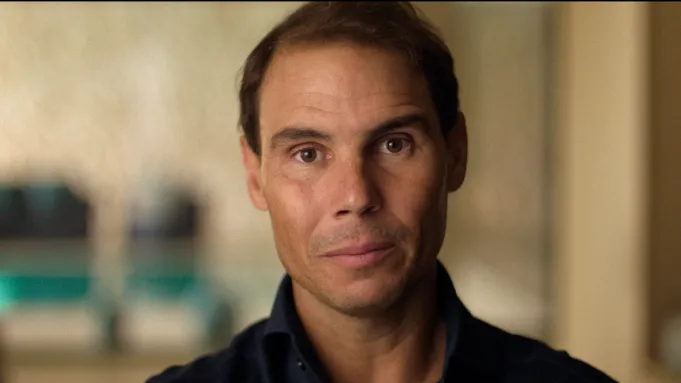
Rafael Nadal has allowed fans to see a side of his life that he has protected for years.
The 22-time Grand Slam champion had long resisted the idea of making a documentary about his personal life. However, as his remarkable tennis career reached its final chapter, Nadal agreed to let filmmaker Zach Heinzerling follow him during his final season.
The result is Rafa, a four-part Netflix documentary series that takes viewers inside the final stage of Nadal’s professional tennis career.
The series follows Nadal through the difficult 2024 season, when injuries continued to affect his body and eventually played a major role in his decision to retire.
A Look at Nadal’s Final Season
Directed by Zach Heinzerling, Rafa explores Nadal’s final year as a professional tennis player.
The documentary combines new footage with archive material from different stages of his career. It also includes interviews with some of his biggest rivals, including Roger Federer and Novak Djokovic.
Viewers are also given a closer look at Nadal’s life away from the tennis court.
The documentary explores his relationship with his family, his team and the people who supported him throughout more than two decades at the highest level of professional tennis.
It also examines the physical and emotional challenges that came with his extraordinary career.
Nadal won 22 Grand Slam titles during his career, but those achievements came alongside years of serious injuries and pain.
Nadal Opens Up About the Cost of Success
Nadal says he understood that his career came with a physical price, but the joy of competing made the sacrifices worthwhile.
“I enjoyed doing what I was doing,” Nadal tells THR. “Of course, I paid the price of suffering. But I always put everything on the balance, and that’s why I was always able to keep going. I said, ‘OK, I’m having pain every day, but on the other hand, I have been enjoying all these amazing and unforgettable moments of my life.”
For Nadal, tennis was about more than trophies.
He says his motivation also came from the people around him, including his family, team and supporters.
“I was doing it for the people next to me, team, family, fans. It’s not [just] a way to talk. That’s true. That’s the way that I approached that,” he added.
Why Nadal Was Reluctant to Make a Documentary
Nadal had previously avoided documentaries because he was uncomfortable with the idea of cameras entering his private life.
He was particularly concerned about exposing personal moments involving his family and team.
This time, however, he agreed to the project because he understood that his career was entering its final stage.
Nadal was not a producer on the documentary. That meant he had to give up some control over how his story would be presented.
Skydance Sports produced the project, while Skydance head David Ellison helped convince Nadal to take part.
The timing also made the project different from a typical sports documentary.
Nobody knew exactly how Nadal’s final season would unfold.
The Story Changed After Another Injury
When Heinzerling began filming, Nadal was attempting another comeback after undergoing hip surgery.
The filmmaker initially did not know what the final story would be.
Nadal was also uncertain about how his comeback would develop.
“I was in that phase of trying to come back, but without the security that the [comeback] is going to go well,” Nadal says.
Soon after filming began, Nadal suffered another hip injury.
The setback changed the direction of the documentary.
Instead of simply documenting another comeback, Heinzerling began asking a much bigger question: what could finally force one of tennis’ greatest competitors to stop?
“Rafa usually wins by outlasting his opponents. That’s what makes him so great. So, if he is so determined and the person who never quits, what’s actually going to make him quit? That became the new story, as opposed to the last comeback or Rafa’s last dance,” Heinzerling says.
Cameras Follow Nadal Behind the Scenes
Heinzerling took a quiet approach to filming Nadal.
Rather than constantly directing the tennis star, he largely adopted a fly-on-the-wall style.
The cameras followed Nadal during training sessions, daily routines and important moments throughout the season.
After Nadal eventually announced his retirement, Heinzerling returned for interviews with Nadal and other people close to him.
The filmmaker also captured some deeply emotional moments.
In one scene, Nadal learns during a car ride that he has suffered another hip injury.
His reaction is quiet but devastating.
“I’m destroyed. I’m destroyed.”
For Heinzerling, moments like this required great care.
The filmmaker understood that Nadal was allowing him into extremely personal moments, and he wanted to respect that trust.
“It’s moments like those that actually build a relationship, and you feel even more of an obligation to protect that vulnerability because you feel more connected to that person and you want to shepherd their image and legacy in as delicate a way as you can,” Heinzerling says.
Nadal’s Life Beyond Tennis
The documentary does not focus only on Nadal’s achievements on the court.
It also shows moments with his family, including his wife and young son.
The production team had to work around Nadal’s daily life while capturing moments that could help viewers understand the person behind the famous athlete.
Camera operators even joined Nadal on the tennis court, where they had to move around as he trained and played.
The documentary also examines the physical damage caused by years of professional tennis.
One striking part of the series shows the condition of Nadal’s foot, which was affected by a degenerative bone disease.
The film also explores the anxiety and uncertainty that followed him throughout his career as injuries repeatedly threatened his ability to compete.
Why the Interviews Were Mostly in Spanish
Another important choice in the documentary was the use of Spanish for many of the interviews.
This allowed Nadal, his family and members of his team to express themselves more naturally.
For a story involving deeply personal experiences, communicating in their first language helped create a more open and emotional picture of Nadal’s life.
The result is a documentary that goes beyond statistics and trophies.
It attempts to show the person behind one of tennis’ most successful careers.
Nadal Finds It Difficult to Watch Himself
Despite taking part in the project, Nadal admits that watching the documentary is not easy.
Seeing himself on screen causes him to analyse his own actions and experiences rather than simply enjoy the finished production.
“It’s very difficult to look at yourself and sit on the sofa and just enjoy the documentary,” he says. “You know, you are analyzing things all the time.”
Instead, Nadal has relied partly on the opinions of people close to him.
Friends and family who watched the documentary gave him feedback that helped him understand how the story might appear to others.
Nadal Wanted His Career to Be Seen in Full
Although injuries played a major role in the final years of his career, Nadal did not want the documentary to portray his entire story through the lens of physical problems.
He knows that injuries caused him to miss many major tournaments.
However, he also wants people to remember the extraordinary success that came between those setbacks.
“I missed plenty of Grand Slams because of injuries, but on the other hand, I was able to have very successful and long career. So I don’t want to only look like ‘OK, I am injured, injured, injured.’”
That balance appears to be an important part of Rafa.
The documentary shows the pain and uncertainty, but it also celebrates the achievements, relationships and memories that made Nadal’s career so special.
Tennis Was Never Just a Job for Nadal
After more than two decades at the top of professional tennis, Nadal says he still feels fortunate about the life the sport gave him.
Despite the injuries and difficult moments, he does not view his career simply as years of work.
“I always felt lucky, even though I went through a lot of injuries. I always felt I am a privileged guy for living the life that I was living,” says Nadal. “I was living from a work that I love a lot. So I never took it like work. Tennis for me was never a job.”
That statement perhaps captures the central message of the documentary.
Nadal’s career was filled with pain, pressure and sacrifice, but it was also driven by love for the game.
His 22 Grand Slam titles, countless victories and legendary rivalries made him one of the greatest players in tennis history.
Now, Rafa gives fans an opportunity to look beyond those achievements and understand the person who made them possible.
For Nadal, retirement marked the end of his professional tennis career.
But through this documentary, his final chapter can be remembered not only for the injuries that eventually forced him to stop, but also for the passion, resilience and joy that defined his journey.




One Comment