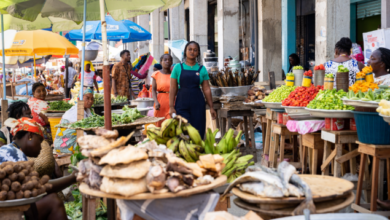

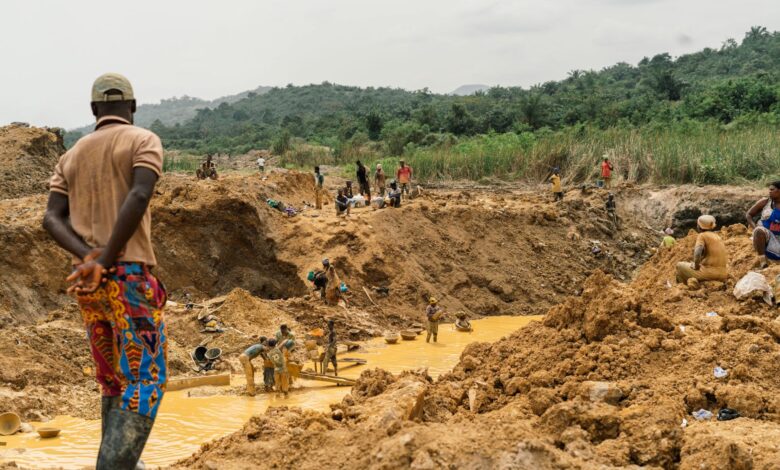
Illegal mining, widely known in Ghana as galamsey, has long been discussed as an environmental and water quality crisis. Its impact on farmland and food supply deserves equal attention. This piece looks at how galamsey directly threatens the food that ends up on Ghanaian dinner tables.
What Galamsey Actually Involves
Galamsey refers to small-scale, often unlicensed and unregulated mining activity occurring across various parts of Ghana, frequently targeting gold deposits found in river systems and surrounding land. Unlike regulated, licensed mining operations that must follow environmental protection standards, galamsey activity typically operates outside these regulatory frameworks, often resulting in significant environmental damage as a direct consequence.
This unregulated mining activity has expanded significantly in various regions across Ghana, driven partly by gold’s continued economic value and the limited alternative economic opportunities available in some affected rural communities, creating genuine economic incentive for this activity despite its well-documented environmental consequences.

The Direct Link Between Galamsey and Farmland Destruction
Illegal mining operations frequently occur on or near agricultural land, sometimes directly displacing farming activity as land gets repurposed for mining operations. Beyond direct land use conflicts, mining activity often causes significant soil degradation, stripping away fertile topsoil and leaving behind damaged land unsuitable for continued agricultural use without significant, costly rehabilitation efforts.
This direct farmland destruction represents an immediate, tangible cost of galamsey activity, removing productive agricultural land from Ghana’s overall food production capacity at a time when the country continues working to strengthen domestic food security and reduce reliance on food imports.
Water Contamination and Its Agricultural Impact
Beyond direct land destruction, galamsey activity frequently contaminates water sources used for both drinking water and agricultural irrigation. Mining operations often use chemicals like mercury in gold extraction processes, with these chemicals frequently finding their way into nearby rivers and water systems that many farming communities depend on for crop irrigation.
This water contamination creates a particularly insidious food security threat, since contaminated irrigation water can introduce harmful substances directly into food crops, creating potential health risks for consumers even when the affected farmland itself remains nominally in agricultural use rather than being directly converted to mining activity.
The Cocoa Sector’s Specific Vulnerability
Ghana’s cocoa sector, one of the country’s most economically significant agricultural industries, has faced particular vulnerability to galamsey encroachment. Cocoa farming regions have seen mining activity expand into areas previously dedicated to cocoa cultivation, directly threatening an industry that supports significant employment and export revenue for Ghana’s broader economy.
This specific threat to cocoa farming carries implications extending well beyond individual farmer livelihoods, given cocoa’s broader significance to Ghana’s export economy and international trade relationships, making galamsey’s encroachment into cocoa farming regions a matter of genuine national economic concern, not simply a localized environmental issue.
The Health Dimension of Contaminated Food Production
Beyond the direct agricultural productivity concerns, contamination from galamsey activity raises genuine public health questions regarding food safety. Crops grown using contaminated irrigation water, or on soil affected by mining-related chemical exposure, can potentially carry health risks for consumers, even when these specific risks are not always immediately visible or apparent without specific testing and analysis.
This health dimension adds urgency to addressing galamsey’s agricultural impact, since the consequences extend beyond economic productivity losses toward genuine, if sometimes underappreciated, public health considerations affecting communities that consume food grown in affected agricultural areas.
What Communities Affected by Galamsey Are Experiencing
Farming communities directly affected by galamsey activity often face difficult, complex circumstances. Some community members may participate in mining activity themselves, drawn by the potential for more immediate income compared to traditional farming, while others watch helplessly as land and water resources essential to their traditional agricultural livelihoods become degraded or contaminated by mining activity occurring in their immediate vicinity.
This complex community dynamic reflects the genuine economic pressures underlying galamsey’s persistence, despite widespread recognition of its environmental and agricultural consequences, since addressing this issue effectively likely requires addressing the underlying economic incentives driving participation in illegal mining, not simply focusing on enforcement against the activity itself.
Government and Civil Society Response Efforts
Various government initiatives and civil society organizations have worked to address galamsey’s environmental and agricultural impact over the years, through a combination of enforcement efforts targeting illegal mining operations, environmental rehabilitation initiatives aimed at restoring damaged land and water systems, and broader public awareness campaigns highlighting the issue’s significant consequences.
These efforts reflect genuine institutional recognition of galamsey’s serious consequences, though the persistence of the issue despite these ongoing efforts also reflects the genuine complexity involved in effectively addressing an activity driven by significant economic incentives, occurring often in remote areas where consistent enforcement monitoring presents genuine logistical challenges.
What Land Rehabilitation Actually Involves
Restoring farmland damaged by galamsey activity represents a significant, often costly undertaking. This can include soil remediation efforts aimed at removing or neutralizing contaminating chemicals, restoring appropriate soil structure and fertility, and in cases of significant water source contamination, broader water system rehabilitation efforts extending beyond the immediately affected farmland itself.
This rehabilitation work often requires significant financial investment and specialized expertise, representing genuine ongoing costs associated with galamsey’s environmental impact that extend well beyond the immediate economic losses experienced by directly affected farmers and communities.
The Broader Food Security Implications for Ghana
Cumulative farmland loss and water contamination from galamsey activity across multiple regions contributes to broader food security concerns for Ghana as a nation. Reduced agricultural productive capacity, whether through direct land loss or reduced yields from contaminated soil and water, can affect overall domestic food production, potentially increasing reliance on food imports and affecting food price stability for Ghanaian consumers more broadly.
Understanding this broader food security dimension helps contextualize why addressing galamsey’s agricultural impact matters not just for directly affected farming communities, but for Ghana’s broader national food security and economic self-sufficiency goals extending across the entire population.
What Consumers Can Understand About This Issue
For everyday Ghanaian consumers, understanding galamsey’s connection to food production offers useful context for broader public discourse regarding this issue, moving beyond viewing it purely as an environmental or water quality concern toward recognizing its direct relevance to food security and, in some cases, food safety considerations affecting the food many Ghanaians consume daily.
This broader understanding can help build stronger public support for continued efforts addressing galamsey, recognizing that its consequences extend directly into everyday concerns like food availability, pricing, and safety, rather than remaining an abstract environmental issue disconnected from immediate, tangible daily life concerns for ordinary Ghanaians.
The Path Toward Sustainable Solutions
Addressing galamsey’s agricultural impact effectively likely requires a multi-pronged approach, combining continued enforcement efforts against illegal mining activity, meaningful economic alternatives for communities currently drawn toward galamsey by limited other opportunities, and sustained investment in rehabilitating already damaged farmland and water systems to restore productive agricultural capacity in affected regions.
This kind of comprehensive approach, addressing both the immediate environmental damage and the underlying economic drivers sustaining galamsey’s persistence, likely offers a more sustainable long-term path forward than enforcement efforts alone, which have historically struggled to fully resolve this persistent challenge despite years of dedicated attention and resources.
The Bottom Line
Galamsey’s impact on Ghana’s farmland and food supply represents a significant, if sometimes underappreciated, dimension of this broader environmental crisis. Beyond the well-documented water quality and environmental degradation concerns, illegal mining directly threatens agricultural productivity, food safety, and Ghana’s broader food security, carrying consequences that ultimately reach every Ghanaian consumer, not just directly affected farming communities.
Addressing this challenge effectively requires sustained, comprehensive effort extending beyond enforcement alone, toward genuine economic alternatives and meaningful land and water rehabilitation, offering the most realistic path toward protecting Ghana’s agricultural capacity and food security for the benefit of the entire country.