Drug bust: You must be worried about your security setup – President Mahama told

Dr. James Kwabena Bomfeh Jnr., popularly known as Kabila, has raised concerns about Ghana’s national security system following a series of narcotics seizures linked to consignments that originated from Ghana.
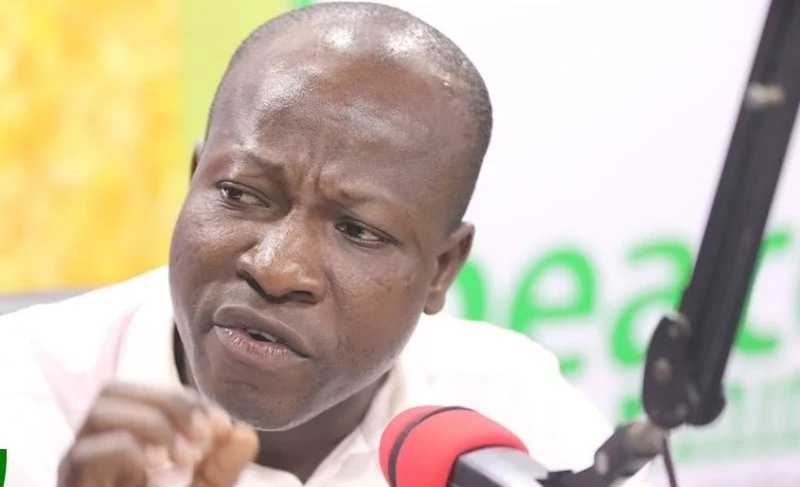
Bomfeh, an academic, political commentator and Chief Executive Officer of the Centre for Citizenship, Constitutional and Electoral Systems (CenCES), made the comments during an interview on Joy News on Monday, September 21, 2026, monitored by MyRoyalFM.com.
His remarks come days after French customs authorities seized nearly 3.9 tonnes of cocaine at the port of Dunkirk in a container that had arrived from Ghana. The shipment, reportedly worth about €225 million, was concealed in a container carrying plastic waste.
The case has triggered questions about how such a large consignment of narcotics was able to leave Ghana undetected and reach Europe.
Ghana is not a cocaine-producing country
Bomfeh said the repeated appearance of Ghana in international narcotics cases should prompt serious questions about the country’s internal security arrangements.
“Despite Ghana not being a producer of cocaine, there are consistent reports linking narcotics seizures back to Ghana as a traceable source,” he said.
He argued that the issue goes beyond individual arrests and should lead to questions about how different security and state institutions coordinate to prevent international drug trafficking networks from using Ghana.
The latest French seizure has added weight to those concerns.
According to reports, French customs intercepted the cocaine on September 10 after the container arrived from Ghana. NACOC subsequently arrested suspects in Ghana and said it was working with international law enforcement agencies to establish their alleged roles in the trafficking operation.
Four Ghanaians have since been charged in connection with the alleged exportation of the cocaine and remanded by the Accra High Court. A Dutch national, Jos Leijdekkers, also known as “Bolle Jos,” has been identified by authorities as being wanted in connection with the case and remains at large.
The allegations against the accused persons remain subject to the court process.
Questions over how narcotics leave Ghana
Bomfeh’s concerns also come as investigators face questions about how the cocaine shipment passed through Ghana’s export system.
Citi Newsroom reported that Ghanaian investigators were examining the exporter, freight-forwarding arrangements and the Customs scanning process connected to the container.
NACOC has also said some of the suspects arrested in connection with the French seizure had been under surveillance for between one and two years.
The Commission’s Acting Director of Public Affairs and International Relations, PNCO Francis Opoku Amoah, said the arrests followed intelligence gathering and monitoring of the suspects.
For Bomfeh, however, the wider issue is whether Ghana’s security architecture is able to identify and stop activities that may be taking place across different parts of the country before they develop into international problems.
He said he had several examples he could use to support his argument but chose not to go into details because of the sensitive nature of narcotics-related matters.
“There are many things I can say to advance this argument but because we are dealing with this narcotics I will leave it at that,” he said.
Concerns about corruption and chieftaincy
Bomfeh also connected his concerns about national security to the traditional chieftaincy institution.
He said he had discussed with a former minister responsible for chieftaincy what he described as corruption surrounding the gazetting of chiefs.
According to him, problems with the process of recognising and gazetting traditional rulers could weaken an institution that plays an important role in Ghanaian society.
“I was discussing ahead of this show with um former minister for chiefty how corruption of gazetting is denigrating the chiefty institution,” he said.
He argued that the security system should be in a position to identify whether traditional leadership claims and installations have followed the required customary processes.
“…nobody is better fit to unravel that than the security arrangement that you cannot hold a gazette without proper customary installation or coronation,” he added.
Bomfeh then raised questions about the number of chiefs whose names appear on the official register despite concerns over whether their gazetting followed the proper process.
“And yet I can tell you there’s a high number of chiefs on the register of chiefs whose gazette…” he said before moving on to another part of his argument.
His comments suggest that he sees the issue not simply as an administrative problem but as one that could affect the credibility of traditional institutions.
Why the narcotics issue has become a national security concern
Ghana has recorded several major narcotics cases in recent years, including seizures involving drugs found locally and consignments linked to the country abroad.
In September 2026, the New Patriotic Party Minority in Parliament called for an independent parliamentary inquiry into what it described as more than US$1 billion worth of drug seizures linked to Ghana under the current administration.
The Minority cited several incidents, including the seizure of nearly 3.9 tonnes of cocaine in France and an Australian seizure of 320 kilograms of methamphetamine concealed in a charcoal consignment traced to Ghana. Those claims were made by the Minority and should be distinguished from independently established findings.
The French cocaine case itself is now before the Ghanaian courts, while investigations continue into how the consignment left the country.
Bomfeh’s comments therefore come at a point when Ghana’s narcotics-control system is facing increased public scrutiny.
The central question is not whether Ghana produces cocaine. It does not. The concern raised by the recent cases is how international trafficking organisations may be using Ghana’s territory, ports, businesses or logistical networks to move illegal drugs.
Security agencies face pressure to trace the networks
A major challenge in international drug trafficking investigations is identifying the people behind the movement of the drugs rather than only those who physically handle or transport the consignments.
NACOC has said the recent arrests form part of efforts to disrupt the people, finances and infrastructure supporting international drug trafficking organisations.
That distinction is important because a successful seizure does not necessarily reveal the full network involved.
Investigators must establish who financed the operation, who organised the shipment, who provided the logistics and how the consignment passed through the relevant controls.
In the French case, NACOC has said it is working with French authorities to obtain additional information and trace the movement of the container out of Ghana.
Bomfeh says the country needs to look beyond individual cases
Bomfeh’s wider argument is that Ghana must examine the systems that allow serious problems to develop rather than treating each incident as an isolated event.
He expressed concern about the international locations where narcotics connected to Ghana have been intercepted.
“So I thought it was going to rather help that sector. I don’t know why and I don’t know uh how but I’m worried as a Ghanaian that these arrests the last time it was in Netherlands. The other time it was in Perry today is it is in in South Africa and we all know that we don’t produce these narcotics here,” he said.
He acknowledged that Ghana does produce some cannabis, commonly referred to as weed, but distinguished that from cocaine trafficking.
“Of course, um, Indian hemp, which is weed, we grow some here,” he added.
The concern, therefore, is about the country’s possible role as a transit or logistics point in international narcotics trafficking rather than suggesting that Ghana is a producer of cocaine.
Watch the full interview below