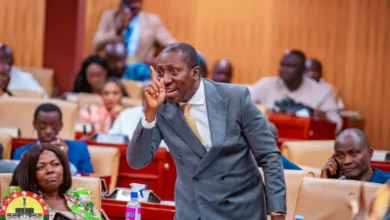
I still disagrees with Torkornoo’s removal – Former Chief Justice Sophia Akuffo

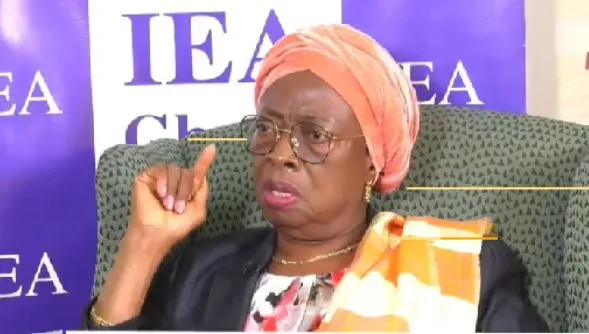
Former Chief Justice Sophia Akuffo has explained why she disagreed with the removal of former Chief Justice Gertrude Torkornoo from office.
Speaking in an interview on TV3 monitored by MyRoyalFM.com, the former Chief Justice questioned the grounds used to remove Torkornoo and said the threshold for removing a Chief Justice or a superior court judge should be much higher.
Sophia Akuffo said the first step in such a process should be to establish whether the allegations against the person are actually true.
She explained that the issue should not only be about the allegations themselves, but also about what those allegations mean if they are proven.
“Establishing whether the accused person actually did what he or she is said to have done.”
She added that there must also be a careful assessment of the consequences of the alleged conduct.
“That all things considered, if what is being alleged is true, what does it mean?”
Akuffo questions the grounds for removal
The former Chief Justice said one of her main concerns was the way misconduct was defined in the process.
According to her, when the alleged misbehaviour is not clearly defined, questions arise about who decides what standard should be used to judge the conduct.
“And when you have not defined stated misbehavior and there’s a whole gamut that has to be discussed because you see, who determines the standard, those standards?”
She said this can create a circular argument in which personal values and feelings eventually become part of the decision.
“Do you see what I mean? Because it becomes a circular argument which in the end ends up with personal values and feelings.”
Akuffo, however, made it clear that she did not want to reopen the confidential proceedings surrounding Torkornoo’s removal.
She said there were limits to what she could discuss publicly because the proceedings were confidential.
‘The threshold was rather low’
Despite that limitation, Akuffo was clear about her disagreement with the decision.
“I disagree with the grounds for her removal.”
When asked why, she pointed to what she considered to be a low threshold for removing the Chief Justice.
“Because the threshold that was being applied was rather low.”
Her comments suggest that she believes the removal of a Chief Justice should require a clearly established and sufficiently serious basis, rather than grounds that can be interpreted broadly.
The former Chief Justice said her criticism was not aimed at reopening the specific details of Torkornoo’s case, but at the wider standard being applied to the removal of a Chief Justice or a justice of a superior court.
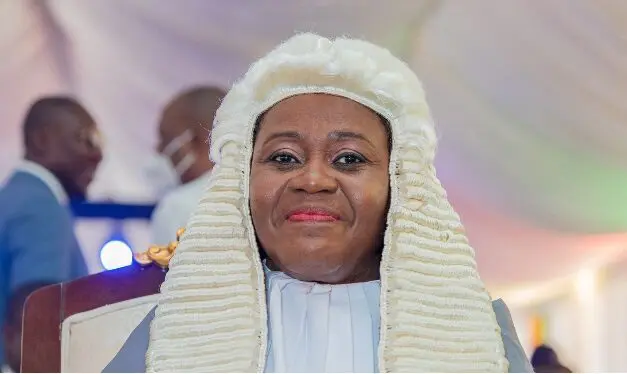
Akuffo criticises the nature of the grounds
Akuffo said she was particularly concerned about what she described as the shallow and temporary nature of the grounds used to justify the removal.
“What we are critiquing is the shallowness and the ephemeral nature of the grounds on which a Chief Justice and a Justice of the Superior Court can be removed.”
Her concern raises a broader question about the standard that should apply when a senior judicial officer is facing removal from office.
The position of Chief Justice is one of the most important in Ghana’s judicial system. Because of that, decisions concerning the removal of a person from the position can have implications beyond the individual involved.
Akuffo’s argument is that the grounds for such a decision should be clearly defined and should meet a sufficiently high threshold.
Why she would not discuss the case in detail
The former Chief Justice also explained why she was careful about discussing the specific circumstances surrounding Torkornoo’s removal.
She said the proceedings were conducted under confidentiality, meaning she could not publicly disclose everything she knew or give a detailed account of the process.
“Once again, I cannot go too much into that because the proceedings were all within confidentiality.”
She added that she had her own view on the matter but could not go into the confidential details.
“So I can’t sit here though I have my view.”
Her comments therefore focused on the principle rather than the confidential details of the case.
A wider debate about judicial accountability
Akuffo’s remarks come amid wider discussions about how Ghana handles complaints and disciplinary proceedings involving senior members of the judiciary.
The removal of a Chief Justice is a serious constitutional matter, and the process requires a balance between accountability and the protection of judicial independence.
Judges must be held to high standards because of the authority they exercise and the decisions they make. At the same time, the grounds for removing a senior judicial officer need to be clear enough to prevent personal disagreements, subjective opinions or changing interpretations of misconduct from becoming the basis for removal.
This appears to be the central issue behind Akuffo’s criticism.
Her argument is not that judicial officers should be beyond accountability. Rather, she is questioning whether the standard used in this particular case was sufficiently high and clearly defined.
Akuffo’s position
Sophia Akuffo served as Chief Justice of Ghana before her retirement from the judiciary. Her experience at the highest level of the judicial system gives her comments particular weight in the ongoing discussion about judicial accountability and the removal of senior judges.
Although she declined to discuss the confidential details of Torkornoo’s proceedings, she made her position clear.
She disagreed with the grounds for Torkornoo’s removal because she believed the threshold applied was too low.
Her comments also point to a larger issue that goes beyond one individual or one case: how Ghana should define misconduct when dealing with the country’s most senior judicial officers.
For Akuffo, that process should begin with establishing the facts, clearly defining the alleged misconduct and then considering whether the proven conduct is serious enough to justify removal.
Without those clear standards, she believes the process can become dependent on personal values and feelings.
That is the concern she says she wanted to raise, rather than revisit the confidential details of the case.