

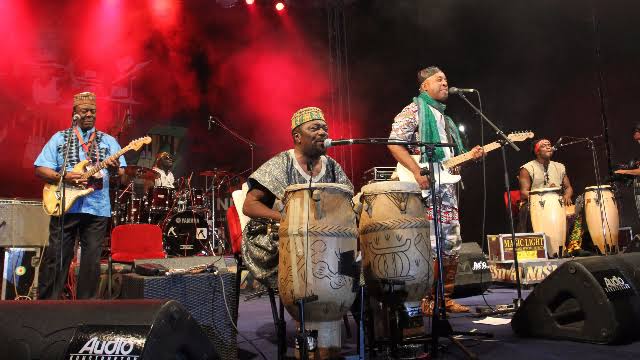
Afrobeats fills stadiums worldwide today. Its rhythms dominate global charts. But its roots trace back decades, to a genre born in Ghana.
Highlife music laid the groundwork for much of what Afrobeats has become. This piece traces that connection.
What Highlife Actually Is
Highlife emerged in Ghana in the early twentieth century. It blended traditional Akan melodies with Western instruments, brought to the region through colonial trade and missionary influence.
Guitars, horns, and dance band arrangements combined with local rhythmic traditions to create something distinctly new.
The genre took its name from the upscale social clubs where it was originally performed, spaces frequented by the era’s more affluent Ghanaians.
Over time, highlife spread beyond these exclusive venues, becoming a genuinely popular genre embraced across Ghanaian society.
The Golden Era of Highlife
Highlife reached its peak popularity through the mid-twentieth century.
Bands like E.T. Mensah’s Tempos became household names, blending highlife with jazz influences to create a sound that resonated across West Africa, not just within Ghana’s borders.
This period established many of the musical patterns that would later influence Afrobeats.
Call-and-response vocal structures, syncopated guitar rhythms, and horn-driven arrangements all became signature elements of the highlife sound, elements that would echo forward into later West African musical genres.
Highlife’s Spread Across West Africa
Highlife did not remain confined to Ghana.
It spread across the region, influencing musicians in Nigeria and beyond. Nigerian highlife artists developed their own distinct interpretations of the genre, blending it with local musical traditions specific to Nigeria’s diverse cultural landscape.
This cross-border exchange laid important groundwork for the eventual emergence of Afrobeat, the genre pioneered by Nigerian musician Fela Kuti in the following decades.
Afrobeat itself blended highlife elements with jazz, funk, and traditional Yoruba music, creating a politically charged, rhythmically complex genre that would later influence the modern Afrobeats sound.
From Afrobeat to Afrobeats: Understanding the Distinction
It is worth clarifying an important distinction here. Afrobeat, the genre pioneered by Fela Kuti, differs from Afrobeats, the contemporary pop genre that has achieved massive global popularity in recent years.
While related, and while Afrobeats certainly draws on Afrobeat’s legacy, the two terms describe distinct musical movements separated by several decades of musical evolution.
Modern Afrobeats emerged more directly from a combination of highlife, Afrobeat, hip-hop, and dancehall influences, blended together by a new generation of West African artists working with more contemporary production techniques and global distribution platforms.
Specific Musical Elements Highlife Contributed
Several specific musical characteristics trace directly back to highlife’s influence.
The genre’s emphasis on guitar-driven melodic hooks appears throughout modern Afrobeats production, even as the underlying instrumentation has shifted toward digital production tools rather than live instrumentation.
Highlife’s rhythmic complexity, particularly its syncopated, danceable grooves, also carried forward into Afrobeats.
This rhythmic foundation remains one of the defining characteristics that distinguishes Afrobeats from other global pop genres, giving it a distinctly West African musical identity even as it has achieved massive international crossover success.
Ghana’s Continued Role in West African Music
Beyond highlife’s historical influence, Ghana has continued contributing directly to the broader West African music scene.
Ghanaian artists have released music that blends traditional highlife elements with contemporary Afrobeats production, creating a distinctly Ghanaian variation within the broader genre.
This continued evolution demonstrates that highlife’s influence is not simply a historical footnote.
It remains an active, living musical tradition that continues shaping how Ghanaian artists approach contemporary music production, even as they work within globally popular genre frameworks like Afrobeats.
Why Understanding This History Matters
Understanding highlife’s role in shaping Afrobeats offers important context for appreciating the genre’s current global success. Afrobeats did not emerge from nowhere.
It represents the culmination of decades of West African musical innovation, with highlife serving as one of the genre’s most significant foundational influences.
This historical understanding also matters for how the broader music industry credits and compensates the traditions that contributed to Afrobeats’ development.
Recognizing highlife’s foundational role helps ensure Ghana’s specific musical contributions receive appropriate acknowledgment within the broader Afrobeats success story, a story sometimes told with insufficient attention to its full regional and historical roots.
Music historians and cultural researchers have increasingly emphasized this point in academic and journalistic work covering Afrobeats’ rise, working to ensure the genre’s origin story includes proper acknowledgment of highlife’s specific and substantial contribution, rather than treating West African musical influence as a single, undifferentiated category.
How Younger Ghanaian Artists Are Reviving Highlife Elements
A number of younger Ghanaian musicians have begun deliberately incorporating highlife elements into their contemporary work, creating a kind of musical bridge between the genre’s historical roots and its modern Afrobeats-influenced evolution.
This deliberate revival reflects a broader appreciation for highlife’s cultural and musical significance among a new generation of artists.
This trend also reflects growing interest among younger listeners in exploring the genre’s history, driven partly by increased access to archival recordings through streaming platforms, which have made older highlife recordings far more accessible than they were in previous decades.
The Global Recognition Gap
Despite highlife’s foundational role, global audiences enjoying Afrobeats today often have limited awareness of the genre’s specific debt to Ghanaian musical tradition.
This recognition gap reflects a broader pattern seen across many musical genres, where foundational influences receive less attention than the more commercially successful genres that eventually build upon them.
Addressing this gap requires deliberate effort from music historians, journalists, and the broader music industry to properly credit highlife’s role whenever Afrobeats’ history and influences are discussed publicly.
The Business Side of This Musical Legacy
Beyond the artistic connection, there is also a business dimension worth considering.
As Afrobeats generates significant global revenue through streaming, touring, and licensing deals, questions naturally arise about how that value connects back to the genre’s foundational influences, including highlife.
Some music industry advocates have called for greater investment in preserving and promoting Ghana’s highlife catalog, both as a matter of cultural preservation and as a potential source of ongoing licensing revenue, given how frequently highlife-inspired elements appear in contemporary production.
Properly cataloging and protecting this musical heritage could create meaningful economic opportunities tied directly to Ghana’s historical contribution to West African music.
What This Means for Ghana’s Cultural Identity
Beyond the specific musical influence, highlife’s legacy carries broader significance for Ghana’s cultural identity on the global stage.
As Afrobeats continues gaining international recognition, Ghana’s role in the genre’s foundational history offers a meaningful point of national cultural pride, distinct from the more visible contemporary Afrobeats success often associated primarily with Nigerian artists.
Promoting this history more actively, through documentaries, museum exhibits, or educational content, could help ensure Ghana’s specific contribution to this globally significant musical movement remains part of the broader public conversation surrounding Afrobeats’ continued rise.
The Bottom Line
Highlife music represents one of the most significant, if sometimes underappreciated, foundations of modern Afrobeats. Its guitar-driven melodies, rhythmic complexity, and cross-border influence across West Africa helped establish musical patterns that continue shaping the genre’s global sound today.
Understanding this history offers a richer appreciation of Afrobeats’ current global success, one that recognizes the decades of West African musical innovation, and Ghana’s specific contributions, that made this success possible.





2 Comments