
Ghana High Commissioner reveals UK Scholarship that covered student, spouse and three children


Ghana’s High Commissioner to the United Kingdom, Sabah Zita Benson, has raised concerns about how government scholarships were awarded under the administration of former President Nana Addo Dankwa Akufo-Addo.
Sabah Zita Benson shared documents showing what she described as examples of “recklessness” in the use of public funds by the Ghana Scholarship Secretariat during the previous government.
According to her, some scholarship awards included financial support for the spouses and children of beneficiaries, raising questions about how government money was spent.

Scholarship Awarded for PhD Programme
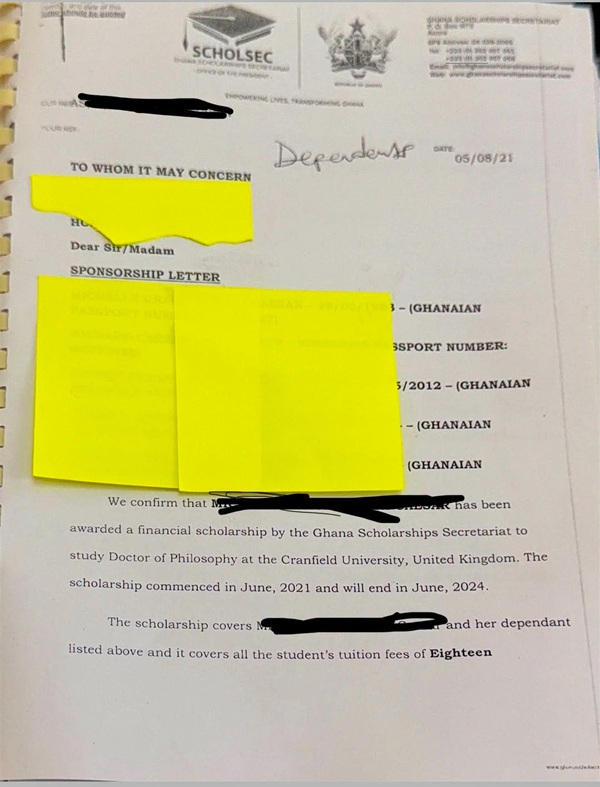
One of the documents shared by the High Commissioner showed a scholarship awarded to an individual whose name was not disclosed.
The beneficiary, identified as a woman, was reportedly awarded a scholarship to pursue a Doctor of Philosophy programme at Cranfield University in the United Kingdom.
The programme was scheduled to run from June 2021 to June 2024.
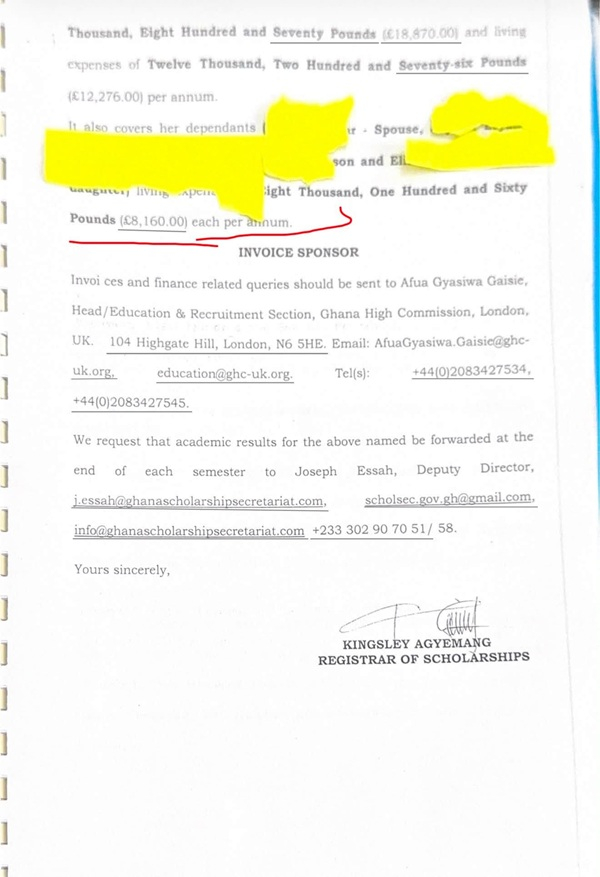
According to the document, the scholarship covered the beneficiary’s tuition fees, which amounted to nearly £19,000.
However, the financial support did not end with the student’s tuition and personal expenses.
Benefits for Spouse and Three Children
The document also indicated that the scholarship package included allowances for the woman’s husband and their three children.
Each of the four dependants reportedly received an allowance of more than £8,000.
This means that the scholarship arrangement provided financial support not only for the student but also for her immediate family while she was studying in the UK.
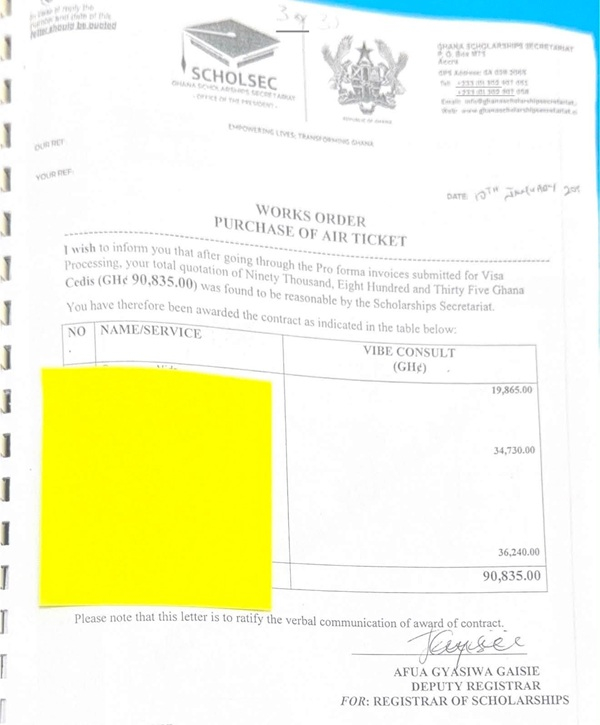
In addition to the allowances, the government reportedly spent more than GH¢90,000 on travel costs for the beneficiaries.
The figures have sparked concerns about the amount of public money used to support scholarship beneficiaries and their dependants.
High Commissioner Questions Use of Public Funds
Sabah Zita Benson described the case as one example of what she believes was poor management of government scholarship funds.
She said the case was not an isolated incident and claimed that there were hundreds of similar cases involving public money.
According to the High Commissioner, the funds used to support spouses and dependants could have instead been directed towards paying the outstanding tuition fees and stipends of Ghanaian students studying in the United Kingdom.
She argued that the accumulated financial obligations owed to students between 2020 and 2025 were significant and that public funds could have been used to address those debts.
“Such RECKLESSNESS!”
In her post, Sabah Zita Benson expressed strong criticism of the scholarship arrangements and questioned why such large amounts of public money were spent on spouses and dependants.
She wrote:
“The document below is just one example. We have hundreds of such cases.
These monies that were spent on spouses and dependents of scholarship students could have been used to clear the annual tuition and stipends of students in the UK that accumulated to over £37 million from 2020 to 2025. Such RECKLESSNESS!” she wrote.
Concerns Over Scholarship Management
The claims have brought renewed attention to the management of Ghana’s government scholarship programme and the way public funds are allocated to students studying abroad.
Government scholarships are intended to support Ghanaians pursuing education and training that can contribute to national development. The issue raised by the High Commissioner, however, focuses on whether the use of public funds for dependants was justified, especially at a time when some Ghanaian students were reportedly facing unpaid tuition fees and stipends.
Sabah Zita Benson’s comments suggest that she believes scholarship funds should be managed more carefully and directed towards areas where they can have the greatest impact.
Her allegations are likely to fuel further discussions about accountability, transparency and value for money in the administration of public scholarship programmes.
The documents she shared, along with her comments, have also raised questions about the policies that were in place at the time and whether similar scholarship arrangements were approved for other beneficiaries.
The debate is expected to continue as attention turns to how government scholarships were awarded during the period and whether changes are needed to ensure that public funds are used more efficiently in the future.




2 Comments