

“I saw Mummy crying. Our house was full of people, some weeping, others holding up Daddy’s pictures in the newspapers. Mummy told me she didn’t expect him to be killed. She said if they had tried him, he wouldn’t have been killed.”
“He was never given the chance to defend himself. Remember, recently ministers about whom certain allegations had been made in the press got the opportunity to defend themselves. They brought in lawyers to defend them.
My father never had the opportunity to defend himself. This really hurts. Day in, day out, the government keeps stressing June 4th, and thereby rubs salt in wounds. If those killed were alive, they would at least have defended themselves. But they were gagged! Imagine the pain we have endured all these years.”
Those were the painful words shared in June 1997 by some of the children who lost their fathers during the events of June 4, 1979. Nearly two decades after that historic and deeply controversial period in Ghana’s history, a handful of orphaned young people opened up about the experiences that had shaped their lives.
My father never had the opportunity
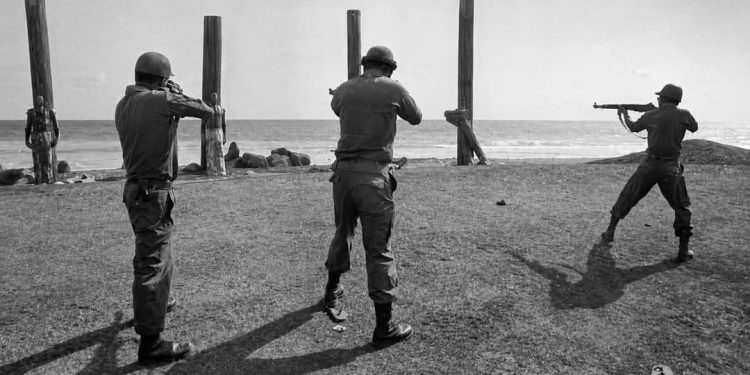
The conversations came around Father’s Day, a time when many families celebrate the men who raised them. For these young people, however, Father’s Day carried a different meaning. Their fathers were no longer alive. They were among those who were lined up, tied to stakes and executed during the upheaval that followed the June 4 uprising.
The memories remain painful because the question of justice has never entirely disappeared. Were the men who were executed given a genuine opportunity to defend themselves? Could their deaths have been avoided if they had been tried through the ordinary courts of law?
These are difficult questions, but they remain relevant as Ghana once again debates the role of public tribunals in the country’s justice system.
The “Rapid Results Panel” and the justice debate
The writer recalls having only vague memories of the events of 1979. At the time, his writing career was just beginning, but he followed the developments and wrote about the extraordinary judicial processes that emerged during the period.
The proceedings were commonly described as “Kangaroo courts”, referring to tribunals that were accused of operating without the full protections and procedures associated with conventional courts.
The writer’s young and anonymous pen gave these institutions another name: the “Rapid Results Panel”.
The description captured the speed and severity with which the panels handled cases involving prominent public officials accused of economic crimes.
The writer’s young and anonymous
The system was presented as an answer to corruption and abuse of public office. But critics argued that the process sacrificed fundamental principles of justice for speed and punishment.
The accused were expected to answer allegations quickly, with little room for lengthy legal arguments or complex defences. Those convicted could receive extremely long prison sentences, sometimes reportedly running into decades. Some were also subjected to hard labour and highly public forms of punishment.
The writer argues that the process created a dark chapter in Ghana’s history because those who appeared before such panels were rarely, if ever, seen returning with declarations of innocence.
That history remains important today because Ghana is once again confronting questions about whether extraordinary tribunals should play a role in dealing with corruption and economic crimes.
Ghana’s constitutional connection to public tribunals
The article turns to the 1992 Constitution and its provisions concerning public tribunals.
According to the writer, Articles 126 and 142 of the Constitution provide for public tribunals. He argues that this provision itself is connected to the political circumstances under which the Constitution was created.
The 1992 Constitution emerged during the final years of the Provisional National Defence Council era and was prepared through a Consultative Assembly involving representatives from different groups and institutions across the country.
The composition included representatives from the Committee for the Defence of the Revolution, the National Council for Women and Development, the National House of Chiefs, market women, the National Union of Ghana Students and the Ghana Bar Association, among others.
The writer claims that some groups, including NUGS and the Ghana Bar Association, eventually distanced themselves from the process because of concerns about its direction.
More than three decades later, the Constitution has been reviewed by various committees. The most recent review process, according to the article, was led by Professor H. Kwasi Prempeh.
The writer says the committee’s report, submitted to President John Dramani Mahama in December 2025, recommended the removal of the tribunal system and its replacement with more conventional courts.
The argument was that Ghana’s justice system should rely on regular courts rather than institutions that could potentially compromise due process.
Parliament’s controversial move
The writer now expresses concern that Parliament has moved in the opposite direction.
According to the article, a Bill seeking to restore or strengthen the tribunal system was passed by Parliament during a late-night sitting on Friday, July 16, 2026.
The writer says the Minority in Parliament, led by Alexander Afenyo-Markin, did not support the move and walked out in protest, while the Majority proceeded with the motion.
The Bill is now awaiting presidential assent.
If signed into law, the writer argues, it could mark a significant shift in Ghana’s approach to prosecuting corruption and other economic offences.
Supporters of the proposal may argue that Ghana’s ordinary courts are too slow and that complex corruption cases can take years to conclude. They may also contend that a faster and more specialised system is necessary to prevent accused persons from exploiting delays in the judicial process.
Critics, however, fear that speed could come at the expense of fairness.
The central question, therefore, is not simply whether Ghana needs faster justice. It is whether faster justice can be delivered without weakening the rights of accused persons.
The shadow of June 4
For the writer, the debate cannot be separated from Ghana’s painful political history.
The memory of June 4 remains particularly sensitive because of the executions and other punishments carried out during the period. For families who lost relatives, the events were not simply political history. They were personal tragedies that permanently changed lives.
The writer argues that the return of public tribunals risks reopening those wounds.
He points to what he describes as recent developments in the country, including searches and arrests, contentious bail conditions, concerns about freedom of expression and the government’s Operation Recover All Loot, or ORAL, initiative.
The article suggests that the ongoing corruption investigations have also exposed tensions between the public demand for accountability and the constitutional requirement for due process.
For supporters of ORAL, the recovery of allegedly stolen public resources is an urgent national priority. But as cases move through the courts, the government must still operate within the boundaries of the law.
That tension is at the heart of the debate.
A question of presidential legacy
The writer ultimately places the responsibility on President John Dramani Mahama, who must decide whether to give the Bill his assent.
He frames the decision as part of what could become the President’s legacy.
The question is whether the President will support a system that its critics associate with Ghana’s difficult revolutionary past or reject it in favour of a justice system built around conventional courts and stronger procedural safeguards.
The argument is not necessarily about whether corruption should be fought. Few would dispute the need to tackle corruption and recover public resources. The real debate is about how that fight should be conducted.
Ghana fight corruption effectively while ensuring that every accused person receives a fair trial?
Can the country create specialised courts that are faster without repeating the mistakes associated with past tribunals?
Can justice be both swift and fair?
These are questions that Parliament, the President, the legal profession and civil society must confront honestly.
The experiences of the families who lost loved ones in 1979 serve as a reminder that the justice system is not merely about convictions and punishments. It is also about the right to be heard, the right to defend oneself and the right to have one’s fate determined through a fair and transparent process.
For the orphans of June 4, those rights came too late.
As Ghana debates the future of public tribunals, their painful memories remain part of the country’s national conversation. The challenge for today’s leaders is to ensure that the pursuit of accountability never becomes an excuse for abandoning due process.
The country must decide what kind of justice system it wants to leave for future generations.
And in making that decision, Ghana must also decide what lessons it has truly learned from its past.





One Comment